
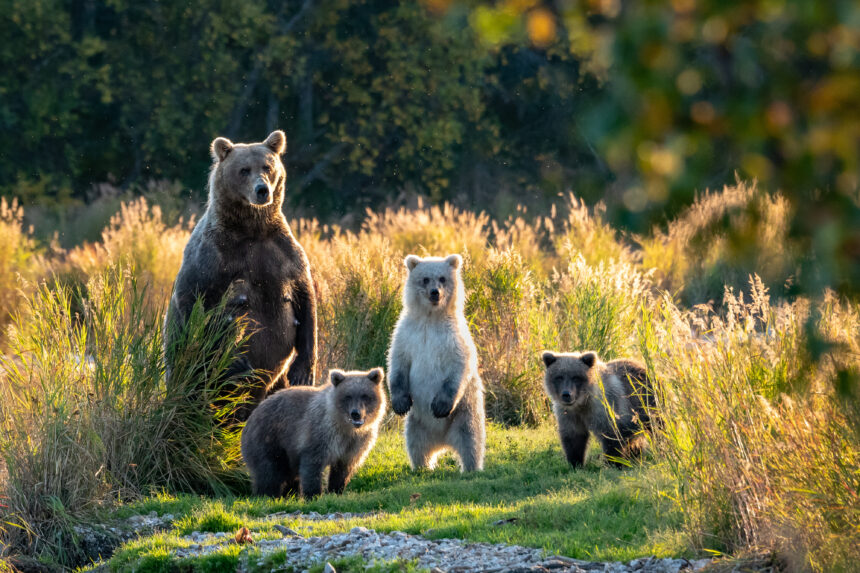
When you picture Alaska, images of wild rivers, towering forests, and majestic wildlife come to mind — and at the top of that list is the mighty bear. But how much of what you think you know about bears in Alaska is rooted in myth? In this article we’ll dive into facts about Alaskan bears, correct common misunderstandings, and show you how to stay safe and informed whether you’re on land or heading out on the water with Inlet Charters Across Alaska.
Myth #1 – “All bears are aggressive killers”
Why this myth persists
Hollywood, storybooks, even campfire tales often present bears as blood‑thirsty monsters. It’s dramatic, it sells. But the reality in Alaska is far more nuanced.
What the real behavior of bears shows
- The state wildlife agency notes that the major bear species in Alaska — the American Black Bear and the Brown Bear (including what many call “grizzlies”) — are generally solitary and avoid conflict when possible. (Alaska Department of Fish and Game)
- For example, in Lake Clark National Park & Preserve alone there can be as many as 219 brown bears in a 54 square‑mile area, yet they establish fluid hierarchies and often peacefully coexist. (National Park Service)
- In other words: yes, bears are powerful wild animals — but aggression is often defensive, not predatory.
How this affects practical planning with Inlet Charters
When you go on a charter with Inlet Charters, you may glimpse bears along the shoreline or from a boat near estuaries — those are coastal brown bears making the most of abundant food near the water. Recognising that they’re not out for you makes your experience smoother and safer. The guides will explain safe distances, behaviour cues, and local habitat factors.
Bottom line: Bears are impressive and capable — but they’re not mindless killers stalking humans. Treat them with respect, keep your distance, and you’ll enjoy viewing rather than fearing them.
Myth #2 – “All Alaskan bears are the same species”
The science behind bear classification
In Alaska you’ll typically encounter three main bear species:
- The American black bear (Ursus americanus)
- The brown bear (Ursus arctos) which includes “grizzlies”
- The polar bear (Ursus maritimus) — far less common inland. (National Park Service)
The term “grizzly bear” often refers to inland brown bears, while “coastal brown bears” (with abundant salmon) grow larger. (National Park Service)
Key physical and behavioural differences
Here are some quick contrasts:
- Black bears: smaller size, shorter claws, often climb trees; one estimate for Alaska: ~100,000 black bears. (Alaska Department of Fish and Game)
- Brown/grizzly bears: prominent shoulder hump, longer claws, heavier, especially coastal ones. (Alaska Department of Fish and Game)
- Habitat and diet influence size and behaviour: coastal access to salmon means much larger body mass. (National Park Service)
Why knowing the difference matters for you
If you’re on an Alaskan wildlife charter — for example with Inlet Charters Across Alaska — recognising what species you’re observing helps you:
- Interpret behaviour (e.g., large coastal brown bears may tolerate closer human presence)
- Understand safety implications (e.g., black bears often withdraw into trees).
- Increase your enjoyment and photography success (species identification makes for better storytelling).
Fact check: Not all Alaskan bears are the same — knowing the species enriches your experience and enhances safety.
Myth #3 – “Bears are always hunting humans”
What bears really want
In Alaska, bears are more interested in salmon, berries, roots, sedge grass, and carrion than human bonfires. For instance, brown bears adapt their diet based on coast vs. inland habitats. (Alaska Department of Fish and Game)
One trivia‑worthy fact: bears can consume up to 15 % of their body weight in a single day, and can gain as much as 200 pounds between spring and fall. (ALASKA.ORG)
The actual risk to humans
The greatest danger comes from:
- Surprising a bear (especially a mother with cubs)
- Getting between a bear and its food source (such as a salmon run)
- Approaching too closely when the bear is feeding or denning.
A recent case near Anchorage reminds us how quickly things can escalate: local authorities issued warnings after two hikers were attacked near salmon‐bearing streams. (AP News)
How to avoid creating risk on your trip
If you’re booking a marine or inshore charter with Inlet Charters Across Alaska, follow these tips:
- Always follow your guide’s instructions about bear country behaviour.
- Avoid carrying strong smells or leaving food accessible.
- Stay at safe distances, especially during salmon runs or when cubs are present.
- Be respectful — wildlife is not a show.
Takeaway: Bears are not out to hunt humans — but they will defend themselves. Awareness and good judgement keep your adventure safe.
Myth #4 – “Bigger bears always mean more dangerous bears”
Why size can be misleading
It’s easy to assume that because a bear is huge, it’s automatically more dangerous. But size mostly reflects food access and habitat. For example: coastal brown bears in the Lake Clark area can exceed 1,000 lbs thanks to rich estuarine diets. (National Park Service)
Behaviour outweighs size
A small bear that is surprised, with cubs, or defending a kill can be more dangerous than a huge bear that is relaxed and feeding peacefully. Also, inland bears — though smaller — may be more reactive because food is scarcer and they’re less tolerant of proximity. (Kenai Backcountry Adventures)
What this means for bear viewing on a charter
On your trip with Inlet Charters Across Alaska, guides will direct you to places where bears are relatively undisturbed and well‐habituated to human presence — often coastal spots where salmon run and bears regularly congregate. These are often safer viewing environments than remote inland zones.
You don’t have to root for the biggest bear — you just need to listen, observe, and maintain safe practices.
Bottom line: Size is less a predictor of danger than context and behaviour.
Myth #5 – “If you stay perfectly still, bears won’t notice you”
Why that advice can backfire
Staying completely silent and motionless when you’re in bear country may actually increase risk. Bears rely heavily on smell and hearing — staying still may prevent them from realizing you’re there, which can lead to surprise encounters (dangerous). (Eielson Air Force Base)
What you should do instead
- Make your presence known: talk quietly, sing, or use bear bells in heavy brush. (Eielson Air Force Base)
- Try to avoid getting between a bear and its food or cubs.
- Hike in groups when you’re on land; if you’re on the water or in a charter boat, stay inside the designated zones and follow your guide.
- Keep the wind direction in mind — let the breeze carry your scent away from the bear.
How this applies to a marine charter experience
When you’re on water with Inlet Charters Across Alaska, you’re often at safe vantage points (coastal beaches, estuaries) where bears can see and smell you coming. The guides know how to approach slowly, reduce disturbance, and let bears carry on their natural activities — which results in better sightings and safer interactions.
The idea is: let the bear know you’re there, and give it space. Silence will not always protect you.
FAQ — Your top questions about Alaskan Bears
Q1: How many bears live in Alaska?
- There are an estimated ~100,000 black bears in Alaska. (Alaska Department of Fish and Game)
- Alaska holds about 95 % of the brown bear population in the U.S. (National Park Service)
Q2: What should I do if I encounter a bear while on a charter?
- Stay calm.
- Do not make direct eye contact.
- Back away slowly, and follow your guide’s instructions.
- Do not run — running may trigger chase instincts.
Q3: Can brown bears and grizzly bears interbreed or are they different species?
- Brown bears (coastal) and inland grizzlies are the same species, Ursus arctos; differences come from diet, habitat and size. (National Park Service)
Q4: Are coastal bears more dangerous than inland bears?
- Not necessarily. Coastal bears may be habituated to human presence, but they still deserve respect. Inland bears may be more unpredictable. Size doesn’t equal danger.
Q5: When is the best time to view bears in Alaska?
- Summer months, especially when salmon are spawning (July–September) in coastal estuaries. Guided charters like those with Inlet Charters Across Alaska schedule trips when wildlife activity is high.
- Always check local conditions, bear activity alerts, and weather.
Optimized for rich‑snippet:
FAQ — Answers to your common “facts about Alaskan bears” questions.
Local Example & Why It Matters
On the south‑coast of Alaska, waterways and estuaries host some of the most impressive bear concentrations. For example, at Brooks Falls in Katmai National Park & Preserve you can see bears fishing salmon in one of nature’s great spectacles. (Wikipedia)When you join a charter with Inlet Charters Across Alaska, you’re often positioned in these coastal zones where the food, habitat and waterways converge — making it possible to witness bears in a natural, respectful way, without interfering. The same strong salmon‑run that attracts halibut fishing also nourishes the bear population — giving you a dual‑experience of scenic wildlife and marine adventure. By understanding the facts about Alaskan bears, you’ll be better prepared and more respectful — which means a safer, richer outing.